
 EN
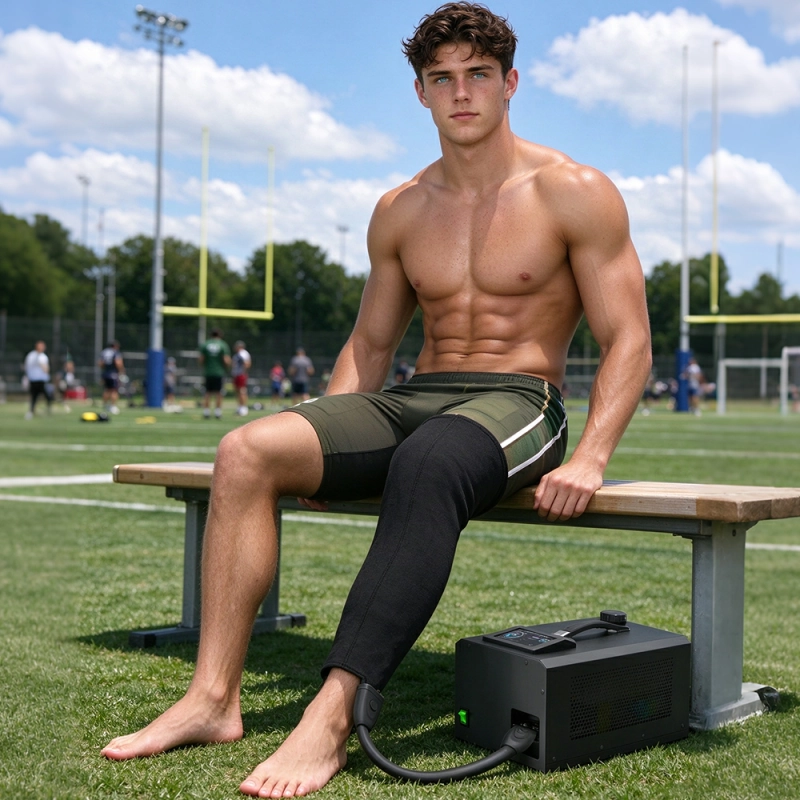
Launching your own cold therapy equipment brand is not simply a matter of putting your logo on a machine. You need products that fit your target market, a manufacturer that can support customization, and a production process that keeps product quality and specifications consistent as your order volume grows.
For distributors, wholesalers, and resellers, the right OEM partner can support the full process: product selection, sample testing, branding, packaging, quality inspection, and repeat production. This guide explains how to build an own-brand cold therapy product line and what to check before placing a medium- or large-volume order.
KONBEST is an EU-registered sports recovery brand with 17 years of product development and manufacturing experience. The company reports supplying more than 100 countries and completing customization projects for over 300 brands. Its 12,000 m² facility has five production lines, an R&D team, quality-control staff, and a product showroom.
Whether you are starting with one private-label model or planning a wider recovery equipment catalog, the first step is to define your product and manufacturing requirements.
Explore KONBEST Cryotherapy Devices
Table of Contents
- 1. Start with a Clear Brand and Product Plan
- 2. Choose the Right OEM Manufacturing Model
- 3. Build Your Own Cold Therapy Product Portfolio
- 4. Compare Product Functions and Specifications
- 5. Match Products to Your B2B Customers
- 6. How the OEM and Private-Label Process Works
- 7. Quality Control and Compliance Checks
- 8. Prepare for Medium and Large-Volume Production
- 9. How to Select a Long-Term Manufacturing Partner
- 10. Frequently Asked Questions
1. Start with a Clear Brand and Product Plan
Before contacting a cold therapy machine manufacturer, decide what kind of business you want to build. A distributor serving sports clubs may need different products from a reseller supplying home recovery customers. A rehabilitation equipment supplier may also have different requirements for product functions, documents, and after-sales support.
Start by answering four questions:
- Who will buy your products? Define whether your main customers are sports teams, gyms, physiotherapy suppliers, recovery centers, retailers, or other distributors.
- Which product category do they need? Options include cold water circulation machines, cold compression systems, wearable cold and heat devices, semiconductor cooling products, and ice bath equipment.
- What price and function range do you want to offer? A clear product position helps you avoid selecting models with overlapping functions.
- How much will you order? Estimate the first order and expected repeat demand. This helps the factory review MOQ, materials, and production capacity.
For a new brand, it is often better to start with a focused range of two or three suitable products. You can test the market, collect feedback, and add more models when you understand which product categories your customers prefer.
2. Choose the Right OEM Manufacturing Model
OEM and private-label manufacturing can both help you sell products under your own brand. However, the level of customization and development work can be different.
Private label: Use an existing product platform
Private label is a practical choice when you want to launch your brand without developing a completely new machine. You select an existing model and customize the approved brand elements.
Depending on the product, options may include:
- Logo printing or brand identification.
- Selected product colors.
- Custom retail packaging and shipping cartons.
- Accessory selection and configuration.
- Branded manuals and product information.
This approach is suitable for distributors and wholesalers who already know their target customers and want to introduce branded products with a defined production process.
OEM: Develop a product around your requirements
An OEM project may involve deeper changes to the product structure, functions, accessories, or technical configuration. For example, a brand may request a different pad shape, control layout, or product setup for a specific market.
Not every request can be applied to every model. The manufacturer needs to review technical feasibility, tooling requirements, testing needs, MOQ, and development time before confirming the project.
Which option should you choose?
If you want to launch an existing product with your own logo, color, and packaging, private label may be the right starting point. If you have specific technical requirements or want to develop a different product configuration, discuss an OEM project with the manufacturer's engineering team.
Ask for a written list of standard features, optional features, and custom development items. This makes the scope and cost of the project easier to manage.
3. Build Your Own Cold Therapy Product Portfolio
A useful product portfolio should give your customers clear choices. KONBEST's cryotherapy range includes several product formats, from wearable devices to water-based systems and ice bath equipment.
Wearable cold and heat therapy: CL803
The CL803 is a portable wearable device for targeted cold and heat applications. Its listed specifications include:
- Three cold settings: 8°C, 12°C, and 16°C.
- Three heat settings: 35°C, 39°C, and 42°C.
- Automatic hot and cold alternating mode with a listed 20-minute cycle.
- Wearable design for areas such as knees, shoulders, elbows, calves, and waist.
- 2500mAh battery.
- Up to 100 minutes of use, with Type-C charging.
This format may suit sports equipment retailers, fitness suppliers, and brands looking for a portable product for targeted recovery applications.
Multi-function cold and heat belt: CL808Pro
The CL808Pro combines cold therapy, heat therapy, red light, and near-infrared light in one wearable product. Its product page lists:
- Cooling temperature down to 3°C.
- Heating temperature up to 45°C.
- 660nm red light and 850nm near-infrared light.
- Built-in 5000mAh battery.
- Three cooling fans.
- Three massage pads.
For distributors, this model offers a different product position from a basic cold therapy machine. It may be considered for recovery brands that want to offer several functions in one portable device.
Semiconductor cold and heat system: CL806Pro
The CL806Pro combines semiconductor cooling and heating with vibration massage. The product page lists a cooling temperature of -3°C, heating up to 45°C, three operating levels, a 5000mAh battery, and a product size of 335 × 315 × 50mm.
This product may fit sports recovery retailers and professional equipment suppliers looking for a targeted device with several functions. Before ordering, confirm the exact temperature measurement conditions, operating time, pad configuration, and included accessories.
Cold and heat compression system: EK-810
The EK-810 combines cold therapy, heat therapy, and pneumatic compression in one system. Its listed specifications include:
- Cold temperature range: 3–15°C.
- Heat temperature range: 40–55°C.
- Pressure range: 30–180mmHg.
- Water tank capacity: 2L.
- Water flow rate: 370 ± 50L/h.
- Refrigeration capacity: 550W.
- Timer setting: 5–90 minutes.
- Power supply: 100–240V AC, 50/60Hz.
The EK-810 may suit sports facilities, physiotherapy equipment suppliers, and rehabilitation-focused distributors that need a combined temperature and compression system. Buyers should check the pad options and intended application before choosing the final configuration.
Ice bath equipment: CB02
The CB02 adds an ice bath category to your product range. Its listed specifications include a size of 135 × 80 × 65cm, capacity for one to two users, 80mm wall thickness, and an 8–10 PSI pump pressure range. The listed electrical requirement is 220V, 50/60Hz, 800W.
This product may suit gyms, sports clubs, recovery studios, and specialist retailers. Before ordering, confirm the chiller configuration, temperature range, water management system, electrical requirements, and installation needs.
Compare KONBEST Cryotherapy Devices and Available Models
4. Compare Product Functions and Specifications
When building your own brand, compare products based on function and customer use rather than appearance alone. The table below provides a starting point for product planning. Always request the latest model-specific technical sheet before placing an order.
| Model | Product Type | Key Listed Features | Potential B2B Channel |
|---|---|---|---|
| CL803 | Wearable cold and heat device | 8/12/16°C cold; 35/39/42°C heat; 2500mAh battery | Sports retailers, fitness suppliers |
| CL808Pro | Cold, heat, and light therapy belt | 3–45°C; 660nm and 850nm light; 5000mAh battery | Recovery brands, specialist retailers |
| CL806Pro | Semiconductor cold and heat system | -3°C cooling; 45°C heating; vibration massage | Sports recovery suppliers |
| EK-810 | Cold and heat compression system | 3–15°C cold; 40–55°C heat; 30–180mmHg pressure | Sports facilities, rehabilitation suppliers |
| CB02 | Ice bath tub | 135 × 80 × 65cm; one-to-two-user capacity | Gyms, sports clubs, recovery studios |
Do not assume that all models share the same MOQ, warranty, production time, or customization options. These details should be confirmed separately for each product and order configuration.
5. Match Products to Your B2B Customers
A product that works well for one sales channel may not be the best choice for another. Before choosing your first OEM models, connect each product to a clear customer group.
Sports teams and training facilities
These customers may need equipment for use between training sessions and competitions. Wearable products such as CL803 can be considered for targeted cold and heat applications. Systems such as EK-810 may be suitable for facilities that want temperature and compression functions in one device.
Physiotherapy and rehabilitation equipment distributors
These buyers should review operating controls, temperature settings, pressure functions where applicable, pad options, manuals, maintenance requirements, and technical support. Product documentation and compliance requirements should also be checked for the destination market.
Gyms and recovery studios
Space, setup, cleaning, user operation, and staff training are important for these facilities. Wearable devices may fit smaller recovery areas, while an ice bath product may require a dedicated installation space and a clear water management plan.
Wholesalers and resellers
Wholesalers often need products at different function and price levels. A focused range can include a portable wearable device, a multi-function system, and a larger facility-oriented product. This gives resellers options without making the catalog too difficult to manage.
For medium- and large-volume buyers, start with products that match existing customer demand. Use sample testing and market feedback to decide which models should receive larger repeat orders.
6. How the OEM and Private-Label Process Works
A clear OEM process helps protect your brand standards and reduces avoidable changes during production. The following workflow is suitable for distributors, wholesalers, and resellers planning their own-brand cold therapy products.
Step 1: Share your market requirements
Tell the manufacturer your target countries, customer groups, preferred product categories, estimated order quantity, and expected launch date. If you have a current product catalog, share it as a reference.
Step 2: Select the product and configuration
Review the available models and compare their functions, dimensions, power requirements, accessories, and operating settings. Ask the manufacturer to identify standard features and optional configurations.
Step 3: Confirm branding and packaging
Prepare your logo files, color references, packaging artwork, labels, and accessory requirements. Confirm the printing method, logo position, packaging size, and any model-specific limits.
Step 4: Test and approve the sample
KONBEST supports 2-day sampling for eligible projects. Confirm sample availability, customization scope, sample charges, and delivery arrangements. Test the product and record any approved changes before mass production.
Step 5: Confirm the production plan
Once the sample and specifications are approved, confirm the order quantity, MOQ, production lead time, inspection points, payment terms, and shipment plan. Keep the approved sample or reference documents for future orders.
Step 6: Complete inspection and shipment
Review the agreed quality checks, accessories, product labels, manuals, and packaging before shipment. KONBEST supports factory inspections and lists 7-day shipping support for eligible projects. Confirm the exact service scope and schedule in writing for your order.
7. Quality Control and Compliance Checks
When customers buy under your brand, they expect the next batch to match the first one. A clear quality-control plan is therefore important for both the first order and repeat production.
Agree on inspection standards before production
Depending on the model, inspection points may include:
- Housing, surface finish, and assembly quality.
- Temperature settings and control response.
- Water circulation, hoses, and connections for water-based products.
- Pressure functions and pad connections for compression systems.
- Battery and charging functions for wearable devices.
- Accessory quantities, labels, and packaging condition.
- Product manuals and model identification.
Ask the factory to explain which checks are completed during production and which are completed before shipment. For larger orders, agree on the inspection method and acceptance standards in advance.
Check certificates and documents for each model
KONBEST lists CE, ISO, RoHS, and BSCI-related credentials in its company information. The documents required for importing and selling a product depend on the product category and destination market. Request the applicable certificates and test reports for the exact model you plan to purchase.
For EU-bound orders, confirm the relevant CE documentation, product labeling, user instructions, and other applicable requirements. A general company certificate should not be treated as proof that every product configuration meets every market requirement.
Plan after-sales support
Before placing a bulk order, confirm warranty coverage, spare parts, technical support, user manuals, and the process for handling product issues. These details help your service team support dealers and end customers after delivery.
8. Prepare for Medium and Large-Volume Production
Building an own-brand product line is a long-term project. A good first order should test the product and production process while keeping future expansion in mind.
Use a phased purchasing plan
- Phase 1 — Product validation: Select a small number of core models and test samples against your market requirements.
- Phase 2 — Initial wholesale order: Confirm the product mix, MOQ, branding, packaging, and inspection standards.
- Phase 3 — Market feedback: Collect feedback from distributors, dealers, and end users. Review which functions and models receive the strongest demand.
- Phase 4 — Repeat production: Use the approved specifications and demand forecast to plan the next order.
- Phase 5 — Product range expansion: Add new models when your sales channels and customer needs support them.
Information to include in a bulk-order request
| Order Detail | Information to Provide |
|---|---|
| Product selection | Model numbers and required functions |
| Quantity | Estimated units for each model and color |
| Branding | Logo files, color references, and packaging artwork |
| Accessories | Required pads, hoses, adapters, straps, and other items |
| Destination | Country, delivery address or port, and preferred shipping method |
| Schedule | Sample approval date, target production date, and required shipment date |
A complete request helps the manufacturer prepare a more useful quotation. It also makes it easier to compare suppliers on the same product configuration and order conditions.
9. How to Select a Long-Term Manufacturing Partner
The right supplier should support more than the first order. For an own-brand business, you need a partner that can help with product development, production planning, quality checks, and repeat orders.
When evaluating a cryotherapy equipment supplier, review these points:
- Product range: Can the supplier offer different cold therapy formats for your target customers?
- R&D support: Can its technical team review your product requirements and explain customization options?
- Production capacity: Can the factory support your expected order quantity and repeat schedule?
- Quality control: Are inspection procedures and acceptance standards clearly explained?
- Customization: Can the supplier support logo, color, packaging, and accessory changes?
- Documentation: Can it provide model-specific product documents for your destination market?
- After-sales service: Are warranty, spare parts, and technical support arrangements clear?
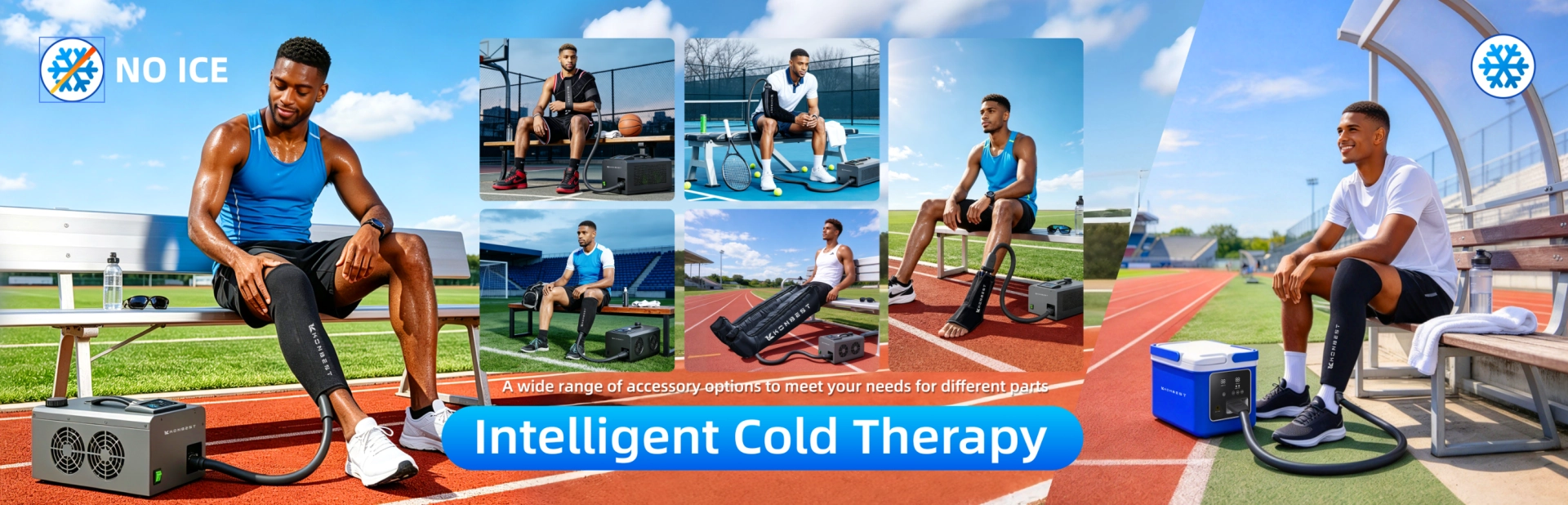
KONBEST offers a wider sports recovery product range that includes cryotherapy devices, compression boots, red light devices, and other therapy equipment. For distributors who want to source several recovery categories, this can support a more connected product plan with one manufacturing partner.
10. Frequently Asked Questions
Q1: Can I sell cold therapy machines under my own brand?
Yes. KONBEST supports private-label projects for suitable models. Customization options may include logo, color, packaging, and accessories. Confirm the available options and MOQ for the selected product.
Q2: What is the difference between OEM and private-label manufacturing?
Private label usually starts with an existing product and adds approved brand elements. OEM may involve deeper changes to product design, functions, or configuration. The scope depends on the model and technical requirements.
Q3: Which KONBEST model is suitable for a new recovery brand?
It depends on your target customers. CL803 is a wearable cold and heat device, CL808Pro combines cold, heat, and light functions, EK-810 offers cold, heat, and compression, and CB02 serves the ice bath category. Review the specifications and application requirements before choosing.
Q4: Can I order samples before placing a large order?
KONBEST supports 2-day sampling for eligible projects. Confirm sample availability, sample cost, customization requirements, and shipping arrangements with the team.
Q5: Can I customize product colors and packaging?
Yes. KONBEST supports color and packaging customization for suitable projects. Share your color references and artwork early so the manufacturer can review feasibility and timing.
Q6: Does KONBEST support medium- and large-volume orders?
KONBEST operates a 12,000 m² facility with five production lines. Share your expected product mix and order forecast so the team can review production availability and scheduling.
Q7: What documents should I request before importing into the EU?
Request the applicable product certificates, test reports, technical specifications, user manual, labels, and other documents required for your product category. Confirm that the documents match the exact model and configuration.
Q8: Can I inspect the factory before placing an OEM order?
Yes. KONBEST supports factory inspections. You can discuss the inspection scope and arrange a review of the manufacturing facility, production process, and quality-control procedures.
Start Your Own-Brand Cold Therapy Project
Building an own-brand cold therapy business starts with the right product and a clear manufacturing plan. Before moving to mass production, confirm your target market, product specifications, customization scope, sample approval, quality standards, and repeat-order requirements.
KONBEST supports distributors, wholesalers, and resellers with a range of cryotherapy and sports recovery products. With 17 years of product development and manufacturing experience, a 12,000 m² facility, five production lines, and OEM/ODM support, KONBEST can help you plan a product range around your business requirements.
Send your target models, estimated order quantity, destination market, and branding requirements to request a project-specific quotation.
Contact KONBEST for Private Label Cold Therapy Machines and OEM Manufacturing Support
Table of Contents
- Table of Contents
- 1. Start with a Clear Brand and Product Plan
- 2. Choose the Right OEM Manufacturing Model
- 3. Build Your Own Cold Therapy Product Portfolio
- 4. Compare Product Functions and Specifications
- 5. Match Products to Your B2B Customers
- 6. How the OEM and Private-Label Process Works
- 7. Quality Control and Compliance Checks
- 8. Prepare for Medium and Large-Volume Production
- 9. How to Select a Long-Term Manufacturing Partner
-
10. Frequently Asked Questions
- Q1: Can I sell cold therapy machines under my own brand?
- Q2: What is the difference between OEM and private-label manufacturing?
- Q3: Which KONBEST model is suitable for a new recovery brand?
- Q4: Can I order samples before placing a large order?
- Q5: Can I customize product colors and packaging?
- Q6: Does KONBEST support medium- and large-volume orders?
- Q7: What documents should I request before importing into the EU?
- Q8: Can I inspect the factory before placing an OEM order?
- Start Your Own-Brand Cold Therapy Project