
 EN
EN
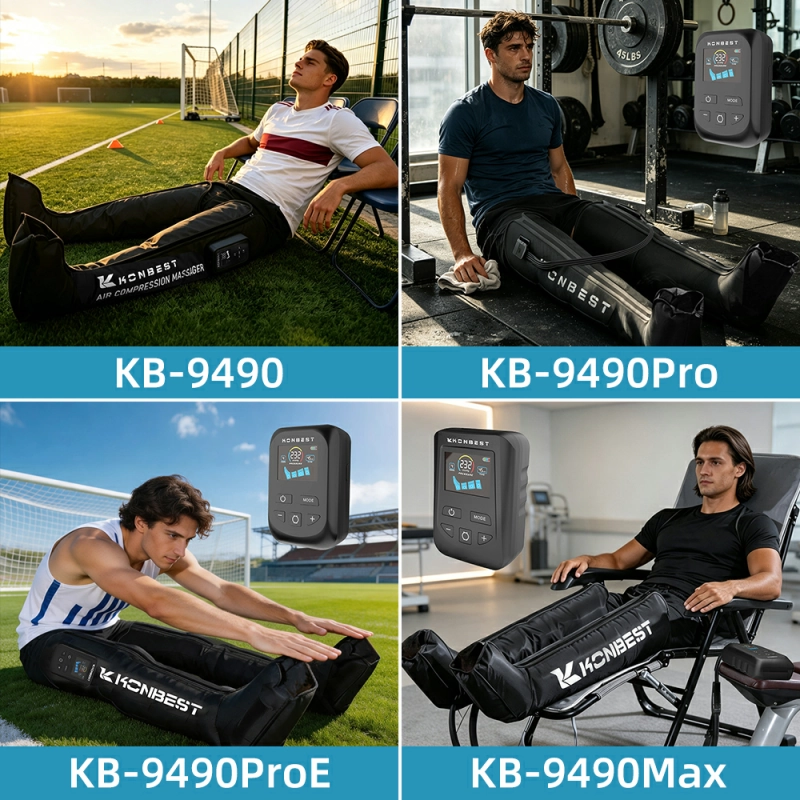
Buying compression boots for a business is not just about finding a low price. For distributors, wholesalers, and resellers, the real challenge is choosing equipment that customers can use comfortably, that can handle regular operation, and that a factory can supply consistently.
A good product should also fit the market you want to serve. A sports recovery center may need different features from a fitness chain, physical therapy business, or online recovery brand. This is why product performance, factory experience, customization, quality control, and supply capacity should all be checked before a medium or large order.
This guide explains the key points B2B buyers should consider when sourcing compression boots, with a focus on practical product selection and long-term supply.
Table of Contents
- Start With Your Target Market
- Check the Compression System
- Compare Pressure Control
- Examine Boot Design and Fit
- Test the Controller and Operation
- Check Materials and Durability
- Common Business Applications
- What to Check for Bulk Purchasing
- Private Label Options
- Why the Manufacturer Matters
- Why Choose KONBEST
- A Simple B2B Buying Process
- Q&A
Start With Your Target Market
Before comparing different recovery boots, decide who will use them.
This sounds simple, but it can prevent many sourcing mistakes. A product for professional sports teams may need strong construction and flexible compression settings. A recovery studio may care more about easy operation and repeated daily use. A reseller selling through an online store may focus on appearance, packaging, accessories, and private label options.
For this reason, B2B buyers should first define:
- Target customer group
- Expected daily usage
- Required compression functions
- Preferred product size
- Packaging requirements
- Target market regulations
- Expected order quantity
- Future reorder requirements
Once these points are clear, it becomes easier to choose the right compression therapy boots instead of simply choosing the cheapest model.
Check the Compression System
The compression system is one of the most important parts of the product.
Pneumatic compression works by using air chambers inside the boots. The chambers inflate and release air according to the selected operating program. This creates controlled compression around the legs.
When testing a sample, do not only ask whether the boots inflate. Check how smoothly the chambers work, whether the compression cycle is stable, and whether the system performs consistently from the beginning to the end of a session.
For distributors, stable operation is important because the same product may be used by many different customers. For wholesalers, consistent construction also helps reduce quality differences between batches.
Compare Pressure Control
Pressure adjustment should also be part of the buying decision.
Different users may prefer different compression levels. A professional athlete, fitness user, and first-time recovery customer may not have the same preference.
A flexible system can therefore give a distributor more options when selling to different customer groups.
When comparing products, ask the manufacturer for the actual pressure range rather than relying on general descriptions such as “strong compression.” Test several settings and check whether the pressure changes smoothly.
Also check whether the selected pressure stays stable during operation. Unstable pressure can create a poor user experience and may lead to more customer complaints.
Examine Boot Design and Fit
The boots themselves deserve close attention.
A recovery boot may have good internal technology, but poor fit or weak construction can still cause problems. The boot should be practical to put on, adjust, and remove.
For B2B purchasing, check the following areas:
- Leg coverage
- Available sizes
- Fastening system
- Air chamber layout
- Fabric strength
- Stitching quality
- Tube connections
- Connector construction
- Ease of cleaning
These details are especially important for recovery centers and gyms where equipment can be used many times during the day.
A distributor should also ask whether replacement boots, tubes, connectors, and other parts are available when needed.
Test the Controller and Operation
A professional recovery product should be easy to understand.
The controller should make it clear how to start a session, stop the system, change pressure, and select different programs. Complicated operation can create unnecessary problems for both commercial users and resellers.
When a sample arrives, test the controller several times. Try different programs and pressure settings. Check the buttons, display, cables, air tubes, and connectors.
For distributors, simple operation can also make product training easier when introducing the equipment to gyms, recovery studios, sports teams, or other business customers.
Check Materials and Durability
Price should never be the only quality standard for a bulk order.
When buying recovery boots, inspect the parts that receive the most handling. Look at the boot fabric, seams, fasteners, air chambers, tubes, connectors, and controller housing.
Ask the factory how products are checked before shipment. A good quality inspection process should cover the main functions and important components rather than only checking the outside appearance.
For larger orders, buyers should also request clear specifications for the approved product. This gives both sides a reference when future batches are produced.
Common Business Applications
Sports Teams
Professional and amateur sports teams can use compression equipment in training facilities and recovery areas. It can be included in a wider sports recovery equipment program for athletes after training or competition.
Recovery Centers
Recovery centers often need equipment that can be operated repeatedly throughout the day. Strong construction, stable compression, easy cleaning, and practical boot design are important factors in this environment.
Fitness Centers
Gyms and fitness centers can add recovery boots to their existing fitness equipment range. They may be used in dedicated recovery areas for members who want a convenient recovery session after exercise.
Physical Therapy and Rehabilitation Businesses
Rehabilitation and physical therapy businesses may also consider pneumatic compression equipment for suitable applications. Buyers should check local rules and professional requirements before making specific medical claims.
Online and Retail Resellers
Online resellers often need products with clear specifications, attractive packaging, stable quality, and private label options. A manufacturer that can support packaging and accessory customization can make the product easier to prepare for different sales channels.
What to Check for Bulk Purchasing
When ordering compression boots wholesale, B2B buyers should evaluate the complete supply process.
A useful checklist includes:
- Product specifications
- Pressure range
- Compression modes
- Boot sizes
- Air chamber design
- Controller functions
- Material quality
- Quality inspection
- MOQ
- Sample availability
- Production capacity
- Lead time
- Packaging
- Accessories
- Warranty
- Spare parts
- Factory inspection
- Repeat-order support
This is particularly important when the first order is only the beginning of a larger purchasing plan.
A distributor may start with a sample order, move to a medium batch, and later require much larger quantities. The factory should be able to maintain the approved product standard as order volume changes.
Private Label Options
For companies building their own recovery brand, standard products may not be enough.
KONBEST supports suitable private label and OEM projects, including:
- Logo customization
- Product color customization
- Package customization
- Accessory customization
The best approach is to confirm customization before production starts. Buyers should provide their logo requirements, color preferences, package design, accessory needs, and other product details.
After the sample is completed, the buyer can check the actual product before moving into bulk production.
This creates a clear reference for the manufacturer and helps the buyer keep the final product closer to the approved design.
Why the Manufacturer Matters
A good product is important, but the factory behind it is just as important for B2B buyers.
Distributors and wholesalers should ask a basic question: Can this supplier support my business after the first order?
This means looking at production capacity, quality control, R&D resources, customization ability, sample service, shipping support, and communication.
KONBEST has more than 17 years of sports recovery equipment R&D and manufacturing experience. The company has supplied products to more than 100 countries and has experience with customization projects for more than 300 brands.
Its manufacturing operation covers 12,000 square meters and includes 5 production lines, a high-end product showroom, and professional R&D and quality inspection teams.
For B2B customers, KONBEST also supports factory inspection. This allows qualified buyers to evaluate the production environment before making a larger purchasing decision.
Why Choose KONBEST
KONBEST focuses on sports recovery equipment and provides a broad product portfolio for distributors, wholesalers, and resellers.
Its experience covers product development, manufacturing, quality inspection, OEM, and ODM services. The company has worked with more than 300 customized brands and supplies customers across more than 100 countries.
The manufacturing base includes 5 production lines and professional R&D and quality inspection teams. The company also has a high-end showroom for product presentation and business communication.
For suitable projects, KONBEST can support private label logo, color, packaging, and accessories. Buyers can also request samples before moving into larger production.
KONBEST provides 2-day sampling support and suitable 7-day shipping projects. Factory inspection support is also available for B2B buyers who need to review manufacturing conditions.
Another advantage for distributors is the wider recovery equipment portfolio. Instead of sourcing every recovery product from a different factory, buyers can discuss a broader product program with one experienced manufacturing partner.
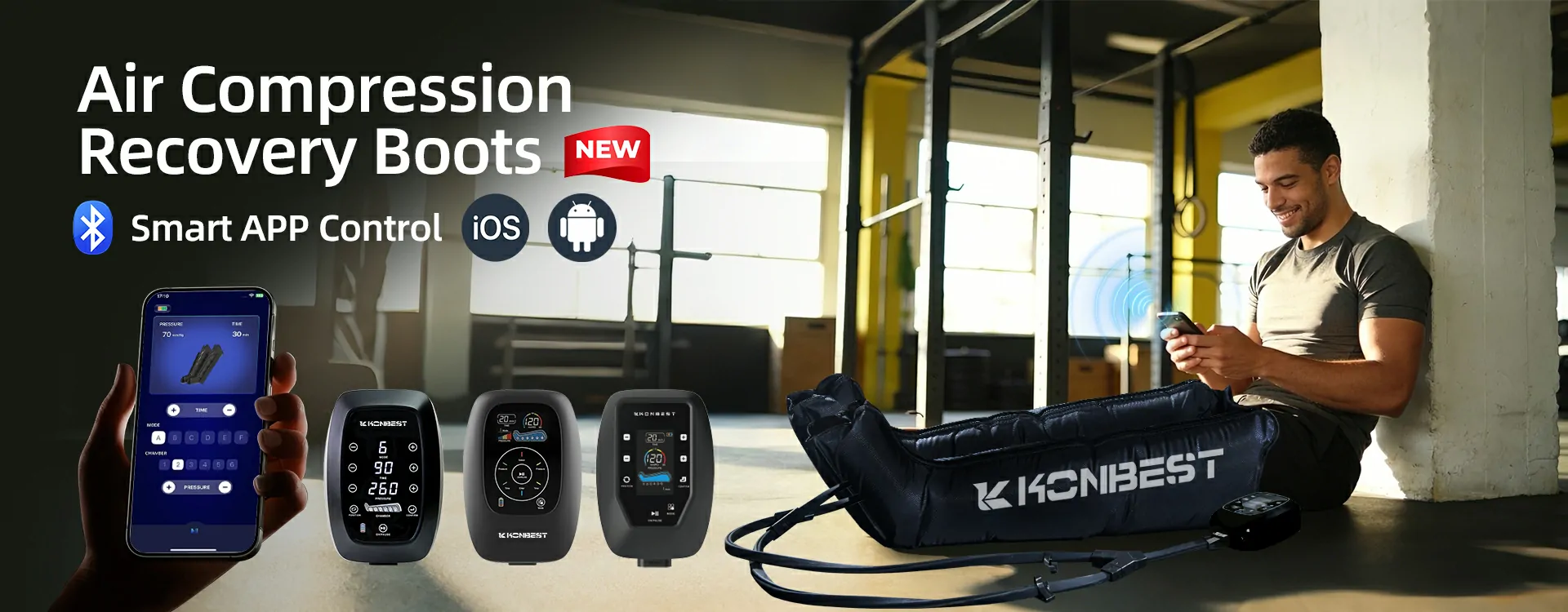
A Simple B2B Buying Process
Choosing the right product does not need to be complicated. A clear process can reduce sourcing risks.
Step 1: Define Your Customers
Decide whether you are supplying sports teams, gyms, recovery centers, rehabilitation businesses, online stores, or other commercial customers.
Step 2: Select the Product Requirements
Confirm pressure control, compression modes, boot size, materials, controller functions, accessories, and packaging.
Step 3: Request a Sample
Use a real sample to test the compression system, fit, controller, materials, air tubes, and connectors.
Step 4: Confirm Customization
If you need a private label product, finalize the logo, colors, packaging, and accessories before mass production.
Step 5: Review the Factory
Check production capacity, quality control, R&D capability, certifications, and factory conditions. Factory inspection can be useful for larger purchasing projects.
Step 6: Approve the Bulk Order
Confirm the final specifications, MOQ, production schedule, packaging, shipping, warranty, and inspection requirements before production.
Step 7: Plan for Reorders
Do not only think about the first shipment. If the product performs well in your market, make sure the manufacturer can support future orders with consistent specifications.
What Makes a Compression Boots Supplier a Better Long-Term Partner?
For medium and large B2B buyers, a supplier should be evaluated as a complete manufacturing partner rather than a simple product seller.
The strongest choice is usually a factory that can connect product development, quality control, customization, production, inspection, and shipping in one process.
This is particularly useful for distributors and wholesalers that need to manage several markets at the same time. A stable product specification makes training, sales materials, customer support, and repeat purchasing easier to manage.
For a growing recovery brand, the ability to start with samples and later move into larger production is also important. The manufacturer should understand that B2B sourcing is a long-term process, not just one transaction.
Final Thoughts
When buying compression boots, do not make the decision based only on price or appearance.
Check the compression system, pressure control, boot fit, materials, controller, air chambers, connectors, durability, and available accessories. Then look at the factory's production capacity, quality control, customization services, sample support, and ability to handle repeat orders.
For distributors, wholesalers, and resellers planning medium or large purchases, this approach can help create a more reliable sourcing process.
KONBEST combines more than 17 years of sports recovery equipment manufacturing experience with a 12,000-square-meter factory, 5 production lines, international supply experience, and customization support for more than 300 brands. With private label options, 2-day sampling, suitable 7-day shipping projects, and factory inspection support, KONBEST can support businesses from product testing through larger B2B orders.
Q&A
Q1: What should I check before buying compression boots?
Check the compression system, pressure range, air chamber structure, boot fit, materials, controller, connectors, durability, warranty, and supplier quality control.
Q2: Are compression boots suitable for commercial businesses?
They can be suitable for sports teams, gyms, recovery centers, rehabilitation businesses, and other suitable commercial applications, depending on the product and local requirements.
Q3: Why should a distributor test a sample?
A sample lets the buyer check the real product before placing a larger order. It can help identify problems with compression, fit, materials, connectors, operation, or construction.
Q4: Can I order private label compression boots?
Yes. Suitable OEM and ODM projects can include logo, color, packaging, and accessory customization.
Q5: What should I ask a compression boots manufacturer?
Ask about manufacturing experience, production capacity, pressure specifications, quality inspection, MOQ, lead time, samples, customization, warranty, spare parts, and factory inspection.
Q6: How can wholesalers reduce customer complaints?
Test samples before bulk production, confirm product specifications, inspect important components, and make sure the bulk order follows the approved sample.
Q7: Does KONBEST support bulk orders?
Yes. KONBEST works with B2B distributors, wholesalers, resellers, and recovery brands and can discuss medium and larger purchasing projects according to product requirements.
Q8: Can KONBEST customize packaging and accessories?
Yes. Suitable private label projects can include customized logos, colors, packages, and accessories.
Q9: Can buyers inspect the KONBEST factory?
Yes. KONBEST supports factory inspection for qualified B2B buyers who want to evaluate the manufacturing environment before placing a larger order.
Q10: Can I source other recovery products from KONBEST?
Yes. KONBEST provides a wider sports recovery equipment range, allowing distributors and wholesalers to discuss multiple recovery product categories with one manufacturing partner.
Table of Contents
- Table of Contents
- Start With Your Target Market
- Check the Compression System
- Compare Pressure Control
- Examine Boot Design and Fit
- Test the Controller and Operation
- Check Materials and Durability
- Common Business Applications
- What to Check for Bulk Purchasing
- Private Label Options
- Why the Manufacturer Matters
- Why Choose KONBEST
- A Simple B2B Buying Process
- What Makes a Compression Boots Supplier a Better Long-Term Partner?
- Final Thoughts
-
Q&A
- Q1: What should I check before buying compression boots?
- Q2: Are compression boots suitable for commercial businesses?
- Q3: Why should a distributor test a sample?
- Q4: Can I order private label compression boots?
- Q5: What should I ask a compression boots manufacturer?
- Q6: How can wholesalers reduce customer complaints?
- Q7: Does KONBEST support bulk orders?
- Q8: Can KONBEST customize packaging and accessories?
- Q9: Can buyers inspect the KONBEST factory?
- Q10: Can I source other recovery products from KONBEST?