
 EN
EN
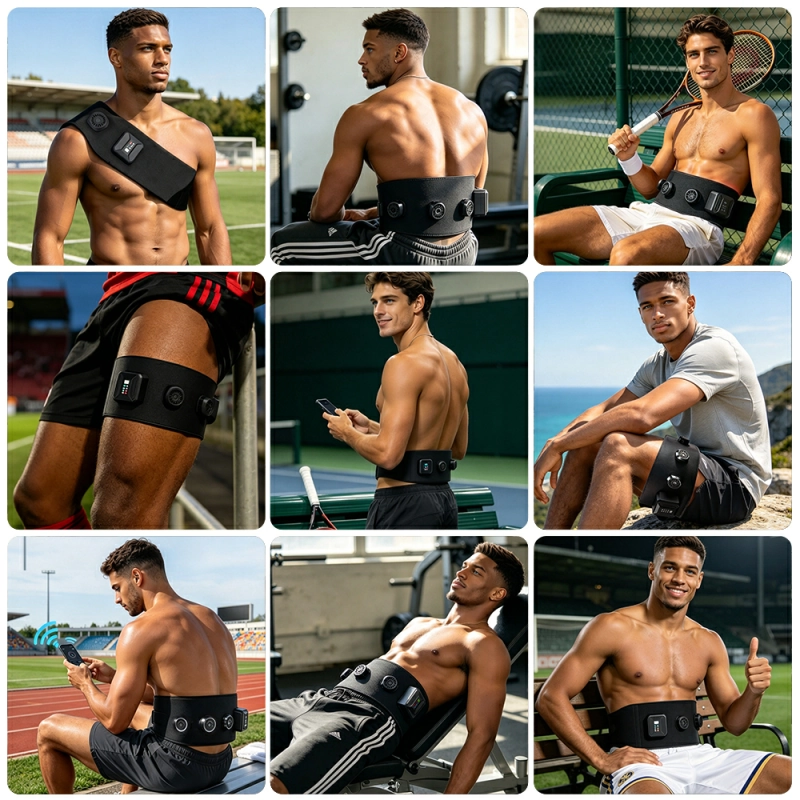
A European distributor may find several cold therapy products that look similar online. The real differences often appear later: one machine is easier to use in a sports club, another combines more functions, and a third may be better suited to a smaller treatment room.
Choosing the right product is only half of the job. The other half is finding a factory that can provide consistent products, prepare samples, handle branding, and support the next order without making the purchasing process difficult.
KONBEST works with sports recovery businesses that need manufacturing support rather than a one-time product deal. The company has 17 years of sports recovery product R&D and manufacturing experience, supplies products to more than 100 countries, and has completed customization projects for more than 300 brands.
For European distributors, wholesalers, and resellers planning medium or large orders, the following points can help turn product selection into a more controlled purchasing plan.
Table of Contents
- Before Requesting a Quote, Define the First Order
- Three Product Types Worth Comparing
- Which Specifications Actually Matter?
- Let the Customer's Working Environment Guide the Choice
- What to Check When the Sample Arrives
- Prepare for European Market Requirements
- What Changes When the Order Gets Larger?
- Adding Your Own Brand Without Losing Product Control
- How to Review the Manufacturing Partner
- Working With KONBEST
- Q&A
Before Requesting a Quote, Define the First Order
One of the most common purchasing mistakes is asking for prices before deciding what the products need to do.
A distributor supplying sports clubs may need portable equipment that can be moved between training areas. A rehabilitation supplier may prefer systems with adjustable cooling and compression. A reseller selling through an online store may need compact products with clear specifications, practical accessories, and packaging that is easy to handle.
These are different purchasing needs. They should not all lead to the same model.
Before contacting a factory, prepare a short list:
- The main customer groups you serve
- The functions each group needs
- The number of models planned for the first order
- The estimated quantity for each model
- Whether the products need private-label branding
- The destination country and expected delivery date
This information gives the manufacturer a clearer basis for recommending products and preparing a quotation. It also helps prevent a large order from being built around a model that does not fit your sales channel.
Three Product Types Worth Comparing
The KONBEST cryotherapy range includes ice water circulation devices, cold compression systems, semiconductor cooling products, and equipment that combines cold, heat, or compression. Rather than compare every model at once, distributors can start with three different product directions.
1. Portable contrast therapy: CL803
The CL803 is designed for users who need a wearable system for targeted areas. Its listed temperature settings include cold options of 8°C, 12°C, and 16°C, as well as heat settings of 35°C, 39°C, and 42°C. The product page also describes automatic hot-cold alternating cycles, Type-C charging, and a 2500mAh battery.
The wearable format may suit sports teams, mobile trainers, and recovery businesses where equipment needs to be moved or stored between sessions. Before ordering, distributors should confirm the exact operating time, included accessories, and configuration of the model being quoted.
2. Multi-function cold and heat system: CL806Pro
The CL806Pro combines cold and heat contrast, air pressure, and massage functions. It is a different option for professional sites that want several functions in one system.
Potential customers include physiotherapy practices, sports rehabilitation facilities, and recovery studios with a dedicated treatment area. For wholesale planning, buyers should compare the complete function set, pad design, controls, and maintenance requirements against the needs of their customers.
3. Cold, heat, and compression in one device: EK-810
The EK-810 combines cryotherapy, thermotherapy, and pneumatic compression. Its multi-function design may interest rehabilitation facilities and professional recovery centers that want to include several treatment modes in their equipment selection.
However, more functions do not automatically make a product the best choice. A distributor should consider how often customers will use each function, whether staff can operate the system easily, and whether the additional features justify the product's position in the range.
Product specifications and available configurations can change. Always confirm the current model information directly with the manufacturer before approving a purchase order.
Explore the KONBEST cryotherapy devices collection to compare the current product options.
Which Specifications Actually Matter?
A specification sheet is useful only when it helps buyers compare products on the same basis. A long list of numbers is not enough.
For cold therapy products, start with the functions that affect the customer's daily use.
| What to compare | Why it matters to a B2B buyer | What to confirm |
|---|---|---|
| Temperature range | Shows the available cooling or heating settings | Actual settings, adjustment steps, and operating conditions |
| Compression range | Helps compare systems that include pneumatic pressure | Pressure levels, adjustment method, and compatible pads |
| Water circulation | Matters for water-based cooling equipment | Tank capacity, flow rate, hose connections, and water requirements |
| Timer and controls | Affects daily operation and ease of use | Timer options, display, control method, and available modes |
| Power supply | Important for products sold in different countries | Voltage, frequency, plug type, and adaptor configuration |
| Accessories | Changes what the customer receives in the box | Pads, hoses, connectors, batteries, and other included parts |
| Packaging | Affects storage, transport, and presentation | Carton size, product protection, labels, and manuals |
For larger orders, keep this information in one comparison sheet. If two models have different configurations, record those differences clearly rather than relying on product names alone.
Let the Customer's Working Environment Guide the Choice
Consider a distributor supplying three types of customers: a local sports club, a physiotherapy practice, and a recovery studio. They may all ask about cold therapy, but their equipment needs can be different.
The sports club may put portability and simple operation first. The physiotherapy practice may want targeted cooling and adjustable compression. The recovery studio may look for a wider range of functions and equipment that fits a dedicated service area.
Instead of stocking the same product for all three groups, a distributor can select a small number of models with clear roles. One can serve as the portable option, another can cover targeted compression, and a multi-function system can serve customers who need a broader set of features.
This approach also helps sales teams explain product differences. Staff can describe the intended use, available functions, and technical limits without making unsupported claims about medical results.
What to Check When the Sample Arrives
A sample order is the chance to find problems while the order is still small.
Do not check only whether the machine powers on. Use a checklist that covers the complete product.
- Does the delivered model match the quotation?
- Do the controls and settings work as described?
- Are the pads, hoses, and connectors compatible with the system?
- Is the cooling or heating performance consistent with the approved specification?
- Is the product easy to clean, store, and move?
- Are the user instructions clear?
- Does the packaging protect the equipment during transport?
- Are the logo, labels, and accessories correct if customization is included?
Write down any changes needed and ask the factory to confirm them before mass production. The final approved sample should become the reference for the bulk order.
KONBEST supports 2-day sampling for applicable projects. Confirm sample availability, configuration, cost, and dispatch timing with the team before planning the purchasing schedule.
Prepare for European Market Requirements
European buyers should check product documentation before committing to a large shipment. Requirements can differ according to the product type, its intended use, and the country where it will be sold.
Ask the manufacturer for the documents that apply to the exact model. These may include relevant conformity documentation, electrical information, product labels, user instructions, and technical files. Do not assume that documents for one model automatically cover another model.
Also confirm whether the product configuration matches the destination market. Power input, plug type, packaging language, labels, and accessories should be agreed before production starts.
KONBEST provides CE, ISO, RoHS, and BSCI-related certification support. Buyers should review the actual documents and confirm their scope and validity for the selected product and market rather than relying on a general list of certifications.
What Changes When the Order Gets Larger?
A small order can often be managed through direct communication. A larger order needs clearer records and approval points.
Before production, the buyer and factory should agree on:
- The model and product version
- The final quantity for each model
- The approved sample and technical specification
- The accessories included with each unit
- Packaging artwork and product labels
- Quality inspection requirements
- The production schedule and shipment plan
- Warranty terms and the process for handling defects
It is also useful to ask how the factory manages component changes. If a component needs to be replaced, the buyer should understand how the change will be reviewed and whether approval is required before the new version is shipped.
These details help distributors manage customer expectations and make later orders easier to organize.
Adding Your Own Brand Without Losing Product Control
Private label can help a distributor create a more consistent product line, but branding should not be treated as a last-minute packaging change.
KONBEST supports customization options such as logo, color, packaging, and accessories for applicable products. Before production, provide the correct logo files, color references, packaging artwork, and labeling requirements.
Ask for a final sample or digital approval of the customized design. Record the approved version so the factory can use the same reference for future orders.
For distributors planning several models under one brand, it is worth checking whether the product range can share a consistent visual style while keeping each model's specifications and accessories clearly identified.
How to Review the Manufacturing Partner
A direct manufacturer should be able to discuss more than the product price. European distributors should review its production resources, technical support, quality process, and ability to manage repeat orders.
KONBEST has 17 years of sports recovery product R&D and manufacturing experience, supplies products to more than 100 countries, and has supported more than 300 brand customization projects. Its 12,000-square-meter factory includes 5 production lines, alongside R&D and quality-control teams and a product showroom.
The company also supports factory inspection. During a visit or inspection, buyers can ask about production planning, incoming material checks, finished-product testing, packaging control, and the handling of quality issues.
KONBEST offers a wider sports recovery product range, including cryotherapy devices, compression boots, red light therapy products, and other recovery equipment. For distributors planning to expand their catalog, this can provide a starting point for discussing several product categories with one manufacturing partner.
Working With KONBEST
For medium and large purchasing projects, the goal is to build a supply relationship that works beyond the first shipment.
KONBEST supports OEM/ODM projects, private-label customization, 2-day sampling, factory inspection, and 7-day shipping for applicable projects. Actual production lead time and shipping arrangements depend on the model, order quantity, customization requirements, and destination.
If you are a European distributor, wholesaler, or reseller, start by identifying the customer groups you serve and the functions they need. Then request the relevant specifications and samples before deciding on the bulk order.
Visit the KONBEST cryotherapy devices page to review the product range and discuss your model selection, expected order volume, documentation, and private-label requirements.
Q&A
Why work directly with a cold therapy equipment manufacturer?
Direct factory communication can make it easier to discuss samples, technical specifications, customization, quality checks, and repeat orders. Buyers should still compare product quality, documentation, service, and total purchasing requirements.
Which KONBEST models should a distributor compare first?
CL803, CL806Pro, and EK-810 represent different product directions: wearable contrast therapy, multi-function cold and heat recovery, and cold, heat, and compression. The best starting point depends on the distributor's customers and sales channels.
Can I order samples before placing a bulk order?
KONBEST supports 2-day sampling for applicable projects. Confirm the selected model, sample configuration, availability, and dispatch timing before placing the request.
Does KONBEST offer private-label customization?
Yes. Customization can include logo, color, packaging, and accessories, depending on the model and project requirements.
Can buyers inspect the factory before a large order?
Yes. Factory inspection is supported. Buyers can use the inspection to review the facilities and ask how production and quality control are managed.
What should European buyers check before importing the equipment?
Confirm the exact product specifications, applicable conformity documents, labels, user instructions, electrical configuration, packaging, warranty, and delivery terms for the destination market.
Table of Contents
- Table of Contents
- Before Requesting a Quote, Define the First Order
- Three Product Types Worth Comparing
- Which Specifications Actually Matter?
- Let the Customer's Working Environment Guide the Choice
- What to Check When the Sample Arrives
- Prepare for European Market Requirements
- What Changes When the Order Gets Larger?
- Adding Your Own Brand Without Losing Product Control
- How to Review the Manufacturing Partner
- Working With KONBEST
-
Q&A
- Why work directly with a cold therapy equipment manufacturer?
- Which KONBEST models should a distributor compare first?
- Can I order samples before placing a bulk order?
- Does KONBEST offer private-label customization?
- Can buyers inspect the factory before a large order?
- What should European buyers check before importing the equipment?