
 EN
EN

For a distributor, wholesaler, or reseller, buying compression boots in bulk is a balance between having enough stock and avoiding slow-moving inventory.
The difficult part is not placing the first order. The difficult part is knowing how many units to buy next month, next quarter, or before a busy sales season.
If you order too little, popular models may sell out before the next shipment arrives. If you order too much, your warehouse may hold products for too long. Both situations can make purchasing harder to manage.
A better approach is to build a simple demand forecast before every major purchase. Look at customer orders, sales history, product preferences, seasonal events, stock levels, and factory lead times. Then connect these numbers with the right product models.
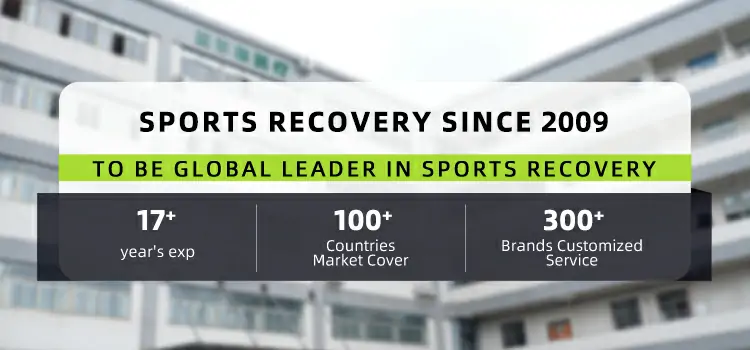
This is especially important for B2B buyers building a long-term recovery equipment business. KONBEST has more than 17 years of sports recovery product R&D and manufacturing experience, supplies products to more than 100 countries, and has experience with more than 300 customized brands. Its 12,000-square-meter factory includes five production lines, an R&D team, quality inspection resources, and a high-end showroom.
Table of Contents
- 1. Start With Real Demand Signals
- 2. Forecast by Customer Type
- 3. Forecast the Right Product Mix
- 4. Use Product Parameters as Demand Signals
- 5. Turn Sales History Into a Simple Forecast
- 6. Prepare for Seasonal and Project Demand
- 7. Use Samples to Test Future Demand
- 8. Set a Reorder Point Before Stock Runs Low
- 9. Plan Medium and Large B2B Orders
- 10. Forecast Private Label Demand Separately
- 11. Match Your Forecast With Factory Capacity
- 12. Build a Longer-Term Supply Plan With KONBEST
- Q&A
1. Start With Real Demand Signals
A demand forecast should start with real customer activity.
Website traffic can be useful, but B2B purchasing decisions should rely more on stronger signals.
For example:
- A customer requests a quotation for 50 units.
- A distributor asks about container-level supply.
- A gym chain plans to open several new locations.
- A reseller receives repeated inquiries for one model.
- An existing customer asks for the same model again.
- A sports recovery center requests several units for a new facility.
These signals have different levels of purchasing value.
A confirmed purchase order is stronger than a general inquiry. A quotation request for 100 units is stronger than one visitor looking at a product page. A repeat customer asking for the same model is also an important signal because it shows that the product has already passed an earlier buying decision.
For compression boots wholesale planning, the first step is therefore to separate strong demand from weak interest.
2. Forecast by Customer Type
Do not put every customer into one demand number.
A distributor, a retail reseller, and a professional recovery center can have very different purchasing patterns.
Distributors
Distributors normally need a wider product range. Their forecast should include both regular stock and products reserved for large customer projects.
If a distributor supplies several gyms and sports facilities, one product may move quickly while another model may only be needed for specific projects.
Wholesalers
Wholesalers usually care about repeat supply. Their forecast should focus on monthly sales, reorder frequency, warehouse stock, and supplier production time.
Resellers
Resellers may begin with a smaller order. Their forecast should watch product inquiries, quotation requests, sample feedback, online sales, and repeat demand.
Sports Teams
Sports teams may buy several units for shared use. Demand can increase around training seasons, competitions, travel periods, or facility upgrades.
Recovery and Physiotherapy Businesses
Professional recovery businesses may focus more on product configuration, control options, operating noise, durability, and long-term service support.
Once customer demand is divided into these groups, the purchasing forecast becomes more useful.
3. Forecast the Right Product Mix
One of the biggest forecasting mistakes is treating all compression boots as one product.
KONBEST currently separates its compression boot range into 4-chamber, 6-chamber, and 8-chamber categories. This structure can help B2B buyers create a simple product ladder for different markets.
| Product Level | Possible B2B Market | Forecast Focus |
|---|---|---|
| 4-Chamber | Gyms, retailers, general recovery channels | Portability, simple operation, entry-level demand |
| 6-Chamber | Sports teams, clinics, recovery centers | Performance features, multiple modes, regular professional use |
| 8-Chamber | Professional recovery and higher-end channels | Advanced configuration and higher product positioning |
This does not mean every buyer needs all three levels.
The right mix depends on your customers.
For example, a distributor serving general fitness stores may need a larger percentage of 4-chamber products. A supplier working with sports teams and professional recovery centers may need a stronger 6-chamber and 8-chamber mix.
The goal is to forecast the demand for each model group separately instead of placing one large order based only on total market interest.
4. Use Product Parameters as Demand Signals
Product specifications can also tell you which model may fit a particular market.
The KONBEST range includes different combinations of chamber number, pressure settings, massage modes, battery systems, pump performance, screens, and coverage designs.
For example, the 9690K-D is a 6-chamber sequential compression device. The current product page lists a patented overlapping chamber design for full-leg coverage, a 5200mAh rechargeable battery, six massage modes, 15 L/min air delivery, fast inflation, a large color LCD touch screen, and operation below 45 dB. :contentReference[oaicite:1]{index=1}
The 9690K-E also uses a rechargeable 5200mAh battery, six massage modes, an overlapping chamber design, a large color LCD screen, and a pressure range of 30–260 mmHg. :contentReference[oaicite:2]{index=2}
For a simpler product level, the 9490 Standard is listed as a 4-chamber system with three massage modes and a 50–200 mmHg pressure range. It also uses a 3200mAh battery and a low-noise pump design. :contentReference[oaicite:3]{index=3}
These differences can help B2B buyers connect product features with customer demand.
For example, a portable product may be easier to position for gyms, personal recovery channels, and mobile users. A 6-chamber model with more control options may be more suitable for sports and professional recovery environments. An 8-chamber system can be considered when a customer wants a more advanced configuration.
Forecasting should therefore answer two questions:
- How many customers may buy compression boots?
- Which configuration are those customers most likely to choose?
5. Turn Sales History Into a Simple Forecast
You do not need complex software to build a useful first forecast.
A spreadsheet can work well for most distributors and wholesalers.
For each model, record:
- Last month's sales
- Three-month average sales
- Current inventory
- Confirmed customer orders
- Open quotations
- Expected repeat orders
- New customer projects
- Supplier lead time
Then use a simple planning formula:
Expected demand = normal sales + confirmed orders + expected repeat orders + project demand + seasonal demand
For example, assume a distributor normally sells 60 units of one model each month. It already has confirmed orders for 30 units, expects another 20 units from repeat customers, and has a new gym project that may require 40 units.
The forecast should not be based on the normal 60-unit monthly number alone.
The potential requirement is already much higher.
This is the kind of calculation that can help buyers decide whether they need a small replenishment, a medium order, or a much larger production plan.
6. Prepare for Seasonal and Project Demand
Compression boot demand can change when customer projects change.
Sports seasons, competitions, gym openings, recovery center launches, promotional campaigns, and large distributor projects can all create short-term demand increases.
A distributor should therefore keep a simple demand calendar.
Mark:
- Major sports seasons
- Competition periods
- New gym openings
- New recovery center projects
- Trade shows
- Planned promotions
- Large customer purchasing periods
- Expected repeat-order dates
If several customers plan purchases in the same period, the factory should be contacted earlier.
This is especially important for private label orders because custom packaging, colors, logos, and accessories can add extra production steps.
7. Use Samples to Test Future Demand
A sample order can provide more than product feedback.
It can show you which model customers actually prefer.
For example, a reseller can test a 4-chamber model and a 6-chamber model with selected customers. Instead of asking only which product looks better, ask practical questions:
- Which model is easier to explain?
- Which model gets more quotation requests?
- Which specifications are customers most interested in?
- Do customers prefer cordless operation?
- Do they ask for more chambers?
- Which accessories are requested?
- Would customers buy one unit or several units?
KONBEST supports 2-day sampling for project evaluation. This can help B2B buyers move from product research to real market testing faster.
Once sample feedback is collected, update your forecast before making the next purchasing decision.
8. Set a Reorder Point Before Stock Runs Low
A demand forecast is not complete without an inventory plan.
One useful method is to set a reorder point.
A simple version is:
Reorder point = average demand during supplier lead time + safety stock
For example, if a distributor normally needs 20 units per week and the expected production and shipping cycle requires several weeks, waiting until the warehouse is almost empty can create a supply problem.
Instead, the buyer should decide in advance when a new order must be placed.
Safety stock should also depend on the model.
A model with stable repeat orders may need a stronger stock buffer. A new model with uncertain demand should usually be managed more carefully until real sales data is available.
This approach is especially useful for compression boots supplier relationships because the buyer can discuss future production needs with the factory before inventory becomes urgent.
9. Plan Medium and Large B2B Orders
For B2B buyers, demand forecasting should lead to different purchasing stages.
Stage 1: Market Test
Use samples and a small initial order to test customer interest.
Stage 2: Medium-Volume Order
When several customers begin requesting the same models, increase the order and measure actual sales performance.
Stage 3: Regular Replenishment
Once the sales pattern becomes clear, create a regular purchasing schedule based on monthly or quarterly demand.
Stage 4: Large Project Order
For gym chains, sports organizations, recovery centers, or distributor projects, calculate the required quantity separately from normal warehouse demand.
This prevents a large one-time project from distorting your normal inventory forecast.
It also helps the factory prepare production capacity earlier.
10. Forecast Private Label Demand Separately
Private label purchasing should not be forecast in the same way as standard products.
When you sell a standard model, you can often adjust the next order based on stock and sales.
With private label products, the order may involve:
- Custom logo
- Custom colors
- Branded packaging
- Accessories
- Manuals and labels
- Product configuration
- Marketing materials
That means the buyer should have a stronger demand signal before starting mass customization.
KONBEST supports private label logo, color, package, and accessory customization. Its experience with more than 300 customized brands can support distributors and resellers that want to develop their own recovery product line.
A practical private label process is:
- Estimate customer demand
- Select the product model
- Test the sample
- Confirm the expected order quantity
- Approve logo and color
- Approve packaging
- Confirm accessories
- Confirm production schedule
- Start mass production
This is safer than producing a large amount of customized stock before the market has been tested.
11. Match Your Forecast With Factory Capacity
There is another side to demand forecasting: supply capacity.
Imagine your forecast shows that your monthly demand may increase from 100 units to 300 units. Your forecast is useful only if the manufacturer can support the higher volume with stable quality.
Before increasing your purchasing quantity, check:
- Production lines
- Manufacturing space
- Quality inspection resources
- Product development capability
- Customization capacity
- Packaging capability
- Lead time
- Replacement part support
KONBEST operates a 12,000-square-meter factory with five production lines and dedicated R&D and quality inspection resources. The company also supports factory inspection, which can help B2B buyers review the manufacturing system before moving into larger purchasing programs.
For a compression boots manufacturer, production capacity is not only about how many units can be made. It is also about whether the same specification can be reproduced consistently across repeated orders.
12. Build a Longer-Term Demand Plan With KONBEST
A good supplier relationship should become part of your demand planning process.
KONBEST has more than 17 years of sports recovery product R&D and manufacturing experience. Its products are supplied to more than 100 countries, and the company has experience with more than 300 customized brands.
The factory covers about 12,000 square meters and includes five production lines, an advanced R&D team, quality inspection resources, and a high-end product showroom.
Its compression boot range covers 4-chamber, 6-chamber, and 8-chamber configurations. This gives distributors more room to change their product mix as customer demand changes. The current product range includes models such as 9490 Standard, 9490K-C, 9690K-D, 9690K-E, and 9890 series products. :contentReference[oaicite:4]{index=4}
The 9690K-D, for example, combines six massage modes, a 5200mAh rechargeable battery, 15 L/min air delivery, a large color LCD touch screen, full-leg overlapping chamber coverage, and low-noise operation below 45 dB. This type of configuration can be positioned for customers looking for more advanced compression control and professional-use features. :contentReference[oaicite:5]{index=5}
The 9890K-C is positioned as an 8-chamber system. Its current product information highlights a large overlapping chamber design, full-leg coverage, 15 L/min airflow, rapid inflation, and quiet operation around 45 dB. :contentReference[oaicite:6]{index=6}
For a B2B buyer, this range creates an important advantage: demand can be managed by product level instead of forcing every customer into one model.
KONBEST also supports OEM and private label projects, including logo, color, packaging, and accessory customization. For buyers planning larger programs, factory inspection and sample support can be included in the sourcing process.
Turn Forecasting Into a Purchasing System
Good demand forecasting is not about predicting the future perfectly.
It is about making better purchasing decisions with the information you already have.
Start with confirmed orders. Add normal monthly demand. Track repeat customers. Watch new projects. Separate models by customer type. Monitor seasonal events. Keep a reasonable safety stock. Then compare the expected demand with factory lead time and production capacity.
This gives distributors, wholesalers, and resellers a much stronger basis for medium and large purchasing decisions.
The most important rule is simple: do not forecast only how many compression boots you may sell. Forecast which models your customers need, when they need them, and how quickly your supplier can replace your stock.
For buyers planning a new product line, regular wholesale supply, or a larger private label project, view KONBEST compression boots and discuss models, samples, customization, accessories, production planning, and bulk purchasing requirements with the manufacturer.
Q&A
Q1: What is the best way to forecast compression boots demand?
Start with confirmed orders, recent sales, repeat customers, open quotations, new projects, seasonal demand, current inventory, and supplier lead time. Then forecast each model separately.
Q2: Should a distributor stock 4-chamber, 6-chamber, and 8-chamber compression boots?
Not always. The right product mix depends on the distributor's customer base. Gyms and general retail channels may need more accessible configurations, while sports and professional recovery customers may ask for higher chamber counts.
Q3: Which product parameters should B2B buyers compare?
Important parameters include chamber number, pressure range, massage modes, pump airflow, battery capacity, timer settings, screen controls, noise level, garment coverage, and accessories.
Q4: Can samples help predict future demand?
Yes. Sample testing can show which models customers prefer, which features receive the most attention, and whether customers are interested in single-unit, multi-unit, or larger purchasing programs.
Q5: How much safety stock should a reseller keep?
There is no single number for every business. Safety stock should depend on sales speed, supplier lead time, order frequency, seasonal demand, and how important the model is to your customers.
Q6: Can KONBEST provide private label compression boots?
Yes. KONBEST supports private label requirements such as logo, color, packaging, and accessories. The exact customization plan and production quantity should be confirmed before production.
Q7: Can KONBEST support medium and large B2B purchasing?
Yes. KONBEST has more than 17 years of sports recovery manufacturing experience, five production lines, a 12,000-square-meter factory, and supply experience across more than 100 countries.
Q8: Can buyers inspect the factory?
Yes. Factory inspection is supported for B2B buyers who want to review manufacturing, quality inspection, production resources, and the supplier's ability to support larger orders.
Q9: What should a buyer do when demand suddenly increases?
Check confirmed orders, current stock, open quotations, repeat customer demand, and supplier production capacity. Then contact the factory early instead of waiting until inventory is almost empty.
Q10: Why is product mix important in demand forecasting?
Different customers may want different chamber counts and features. Forecasting the product mix helps distributors avoid having too much stock of one model while another popular model is unavailable.
Table of Contents
- Table of Contents
- 1. Start With Real Demand Signals
- 2. Forecast by Customer Type
- 3. Forecast the Right Product Mix
- 4. Use Product Parameters as Demand Signals
- 5. Turn Sales History Into a Simple Forecast
- 6. Prepare for Seasonal and Project Demand
- 7. Use Samples to Test Future Demand
- 8. Set a Reorder Point Before Stock Runs Low
- 9. Plan Medium and Large B2B Orders
- 10. Forecast Private Label Demand Separately
- 11. Match Your Forecast With Factory Capacity
- 12. Build a Longer-Term Demand Plan With KONBEST
- Turn Forecasting Into a Purchasing System
-
Q&A
- Q1: What is the best way to forecast compression boots demand?
- Q2: Should a distributor stock 4-chamber, 6-chamber, and 8-chamber compression boots?
- Q3: Which product parameters should B2B buyers compare?
- Q4: Can samples help predict future demand?
- Q5: How much safety stock should a reseller keep?
- Q6: Can KONBEST provide private label compression boots?
- Q7: Can KONBEST support medium and large B2B purchasing?
- Q8: Can buyers inspect the factory?
- Q9: What should a buyer do when demand suddenly increases?
- Q10: Why is product mix important in demand forecasting?